
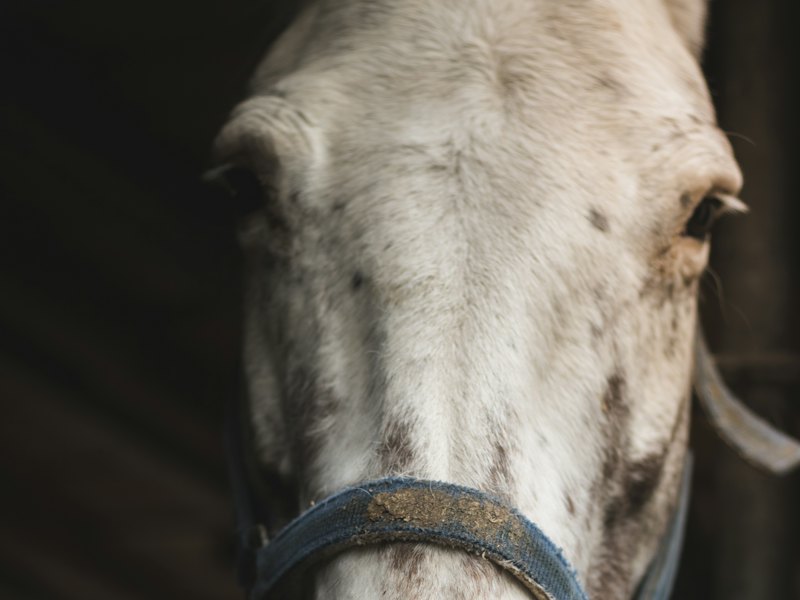
- Most horses start to show signs of ageing in their mid to late teens, but every horse ages differently.
- Teeth wear about 2–3 mm a year and eventually run out, so older horses need dental checks every 6–12 months and often softer, soaked feeds.
- A healthy older horse at a good weight needs much the same diet as a younger one. Unexplained weight loss or gain is a reason to call the vet.
- Keep older horses moving: long warm-ups and cool-downs, plenty of turnout, and regular saddle checks as their shape changes.
- A calm older horse that turns nervous or spooky may have a problem with its eyesight or another medical issue.
Living longer
The British Horse Society notes that, thanks to better veterinary care, nutrition and management, horses and ponies live longer than ever, with many reaching their 30s. Bransby Horses compares a 20-year-old horse to a 60-year-old person.
Most horses show the first signs of ageing in their mid to late teens, though every horse ages differently: genetics, management and environment all play a part. Defra's code of practice notes that older horses may need more supervision and extra veterinary care. The British Horse Society suggests an annual health check with your vet, to catch developing problems while early treatment can still help.
Signs of ageing
The British Horse Society and Bransby Horses list signs to look out for. Some are obvious in one horse and invisible in another:
- A dull coat and poorer skin
- Weaker immunity: more infections from minor wounds, or seeming under the weather more often
- Poorer sight and hearing, so the horse doesn't respond to you in the same way
- Dental problems: dropping food while chewing (quidding), or struggling to chew forage
- Muscle loss over the back and hindquarters, sometimes with a hollow or sway back, and less strength to carry a rider
- Stiff or swollen joints, and a shorter stride, especially first thing in the morning
Teeth
A horse's teeth wear away by about 2–3 mm a year, and keep erupting from the jaw to make up for it. As the horse ages there is less tooth left to erupt, and by its mid to late twenties, the British Horse Society explains, there is nothing left: the tooth effectively "runs out". (See Teeth for how they work.)
Worn teeth chew less well, so grain, mixes, rough forage and even grazing get harder to manage, raising the risk of colic, choke and weight loss. The British Horse Society suggests:
- A dental check every 6–12 months by a vet or qualified equine dental technician
- Soaked, softer feeds as a fibre replacement, so the teeth needn't work so hard
- Four or five smaller feeds a day, because soaking adds bulk and limits how much the horse can eat at once
Feeding and weight
A healthy older horse at an ideal weight needs much the same diet as a younger adult, the British Horse Society says. Things change when its health does:
- Unexpected weight loss or gain can be linked to many age-related conditions, including dental problems. Ask your vet to look for the cause, and fat score your horse regularly so you notice changes early.
- Aim for a fat score of 2.5–3 out of 5. An overweight older horse is as much of a concern as an underweight one: extra weight raises the risk of laminitis and strains ageing joints.
- Horses that lose weight easily can be fed high-fibre, protein-rich feeds, with vegetable oil for extra calories. Introduce any new feed gradually, over 10–14 days.
- Watch for pain. A horse with arthritis in its neck or forelegs may find pulling hay from a net, or lowering its head to graze, uncomfortable, and eat less as a result.
- Watch for bullying in a herd. An older horse may need its extra feed in a separate pen, so it can finish it.
- Keep warm in winter. Older horses can be less good at keeping themselves warm. If your horse loses too much weight in winter, make sure it has shelter, rugs and extra feed.
Bransby Horses notes that conditions such as laminitis, Equine Metabolic Syndrome and PPID (Cushing's disease) can complicate feeding, so check with your vet before making changes.
Common conditions
- Arthritis can affect horses of any age, but is more common in older horses after years of wear on the joints, especially if they have had a joint injury or a demanding athletic career. Any stiffness should be checked by a vet, to make sure it isn't pain.
- PPID (Cushing's disease) is a long-term, progressive hormonal condition. Age-related changes can make the pituitary gland overactive.
- Cataracts make the lens of the eye cloudy, like frosted glass. Signs include trouble picking the feet up over small obstacles, shying or spooking, and a cloudy or white look to the pupil.
- Melanomas are the most common skin tumour in older horses, especially greys. They often stay non-cancerous but grow slowly, and can cause problems when several grow in one place. Look for them when grooming, particularly under the tail and around the anus, and below the ears and behind the jaw.
- Worms. Older horses can have a weaker immune response, which leaves them more vulnerable to a heavy worm burden. Keep up a risk-based worm control programme, planned with your prescriber.
When an older horse acts out of character
The Horse Trust, which cares for many retired horses, points out that an otherwise calm horse showing fear can be a sign of a problem that needs a vet. One of its older horses suddenly became nervous coming in from the field and worried about going into his stable; he turned out to have cataracts.
Eye problems are common in older horses. In a study the Horse Trust supported, the University of Edinburgh's veterinary eye specialists examined 50 of its older horses: 84% had some disease of the eye, and 52% had a cataract in at least one eye. The Horse Trust says horses usually adapt well. Its care plan for that horse used sound cues, a companion horse and a predictable routine.
Feet
Older horses' hooves grow more slowly, but the British Horse Society still recommends farrier visits every 4–6 weeks, as your farrier advises. Overlong, unbalanced feet put extra strain on the joints. Pick out the feet daily, as a weaker immune system makes infections such as thrush harder to fight off. When you pick up a foot, keep it low and close to the horse's midline, because stiff joints may not let an older horse lift its feet as high as before. See Hoof care.
Exercise and retirement
Exercise keeps an older horse mobile, but it needs care:
- Only exercise a horse that is sound and healthy, and under veterinary guidance. Gentle ridden exercise can help prevent muscle loss over the back and quarters.
- Warm up and cool down for longer, to let the horse stretch and to stop older joints and muscles seizing up.
- Check the saddle regularly, because the horse's shape changes as it loses muscle.
- Review the workload regularly, and reduce it when the time comes, with help from your vet and a coach.
- Once a horse is retired, increase turnout where you can and avoid long spells standing in a stable. In winter, a safe arena or pen, or daily in-hand walks, can help.
World Horse Welfare's view, for retired sport horses, is that quality of life always matters more than quantity. A horse that is sound and healthy can be retrained for a less demanding job, such as leisure riding. One that can no longer be ridden can be retired. That means adequate feed and forage, daily health checks with veterinary support, regular hoof care, at least yearly dental checks, and company from other horses. Specialist retirement liveries exist but tend to be expensive, and some horses find new homes as companions.
Quality of life
Bransby Horses suggests regularly asking whether your horse still interacts with you and other horses as it did, eats its normal amount of forage, moves normally, and seems to enjoy life. If several signs of decline appear together, ask your vet's advice. The lifecycle page has the full checklist, and End of life covers the hardest decision.
Call your vet about any unexplained weight change, stiffness or lameness, a change in behaviour, or a horse that struggles to get up. Consider an annual health check for every older horse.
This guide cannot diagnose your horse. If in doubt, call.
Sources
- Care of the elderly horse — The British Horse Society (accessed 8 October 2026)
- Caring for an aged equine — Bransby Horses (accessed 8 October 2026)
- Why might an older horse be acting out of character? — The Horse Trust (accessed 8 October 2026)
- Life after competition — World Horse Welfare (accessed 8 October 2026)
- Code of practice for the welfare of horses, ponies, donkeys and their hybrids (2018) — Department for Environment, Food & Rural Affairs (accessed 8 October 2026)